
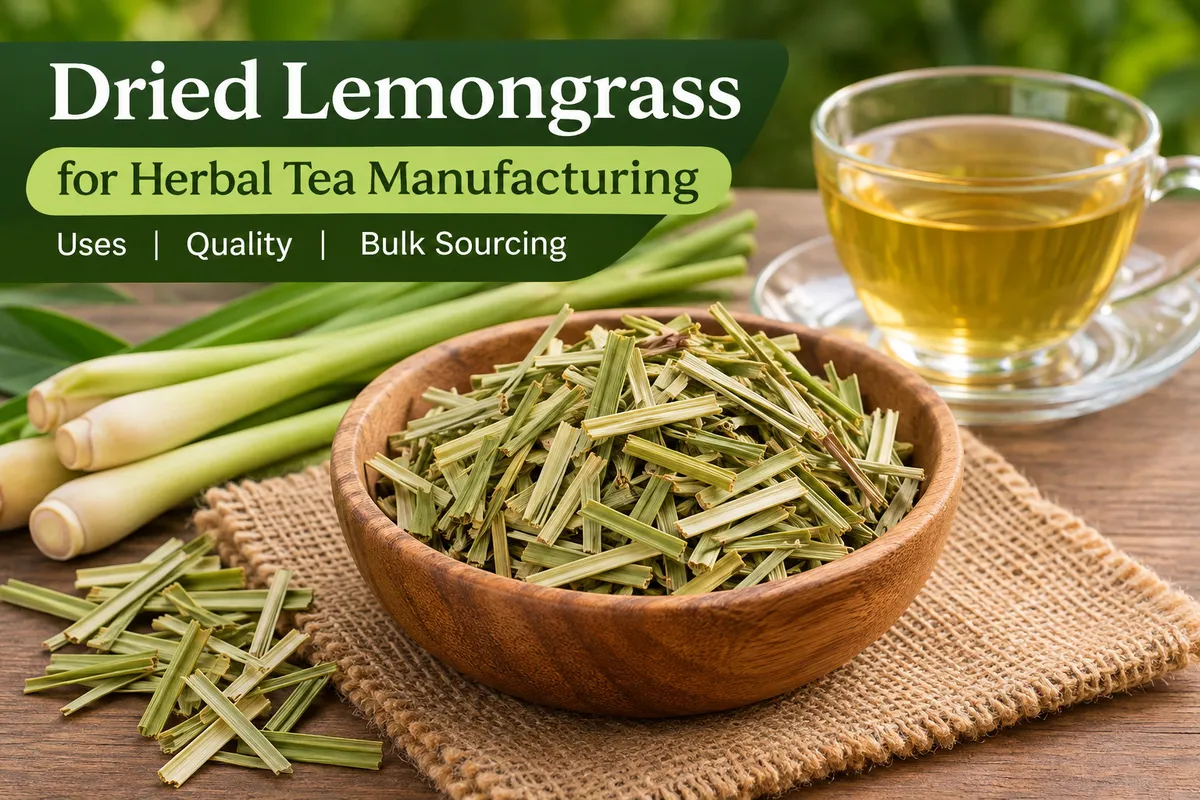
Dried Lemongrass for Herbal Tea Manufacturing: Uses, Quality and Bulk Sourcing
Dried lemongrass is a popular botanical ingredient used in herbal infusions, specialty tea blends and beverage formulations. Recognised for its fresh citrus-like aroma and distinctive flavour, it offers tea manufacturers and beverage businesses an ingredient for developing a variety of botanical products.
As interest in herbal and plant-based beverages grows, manufacturers need to evaluate ingredient quality, sourcing consistency and supplier capabilities before purchasing in bulk.
This guide explores the commercial applications of dried lemongrass, important quality considerations and how B2B buyers can evaluate suppliers.
1. What Is Dried Lemongrass?
Lemongrass is an aromatic plant commonly used in culinary applications and herbal infusions. Its leaves and other suitable plant portions can be processed and dried for use as botanical ingredients.
Dried lemongrass is available in different forms depending on the intended application and processing requirements. Common presentations may include cut leaves and smaller dried pieces.
Its characteristic citrus-like aroma makes it suitable for standalone herbal infusions and combinations with other botanical ingredients.
2. Commercial Applications of Dried Lemongrass
Herbal tea manufacturing
Dried lemongrass can be used as a primary ingredient in herbal tea products. Manufacturers can develop standalone lemongrass infusions for loose-leaf tea and tea bag applications.
Herbal tea blends
Tea brands can combine lemongrass with other suitable botanicals to develop distinctive flavour profiles. Possible blend ingredients include dried mint, hibiscus and other herbs, depending on the intended formulation.
Specialty beverage development
Beverage manufacturers may explore lemongrass as an ingredient in selected botanical infusions and specialty beverage products.
Food and culinary applications
Dried lemongrass can also be considered for selected seasoning blends, culinary preparations and food formulations where its characteristic aroma and flavour are appropriate.
Private-label botanical products
Private-label manufacturers may use dried lemongrass when developing branded herbal tea ranges. Product specifications, formulation requirements and destination-market regulations should be considered during development.
3. Quality Factors to Check Before Bulk Purchasing
Selecting suitable dried lemongrass requires more than comparing supplier quotations. Buyers should establish clear product specifications before confirming an order.
Appearance and cut size
Check whether the supplied product matches the agreed presentation, such as cut leaves or other specified forms. Consistent cut size may be important for blending and tea bag production.
Aroma
The product should have a characteristic lemongrass aroma. Unusual or unpleasant odours should be investigated before acceptance.
Moisture content
Moisture specifications should be agreed with the supplier. Appropriate moisture management helps support the storage and handling of dried botanical ingredients.
Cleanliness
Inspect the material for visible foreign matter and other contamination concerns. Buyers should review the supplier's quality-control procedures and relevant documentation.
Testing and documentation
Depending on the intended application and destination market, buyers may request relevant microbiological testing, pesticide residue analysis, heavy metal testing and other product-specific documentation.
Batch consistency
Manufacturers should evaluate whether the supplier can maintain agreed product specifications across different batches.
4. What Should Bulk Buyers Ask a Lemongrass Supplier?
Before placing a commercial order, procurement teams should clarify:
Is the product supplied as cut leaves or another form?
What cut sizes and product specifications are available?
What are the agreed moisture and cleanliness parameters?
Is a product specification sheet available?
Can relevant test reports or a certificate of analysis be provided?
What packaging options are available?
Can batch identification and traceability information be provided?
What documentation is required for the destination market?
These questions help buyers evaluate the suitability of an ingredient and the supplier's ability to support commercial requirements.
5. Packaging and Storage Considerations
Dried lemongrass should be protected from moisture, excessive heat, direct sunlight and strong external odours.
The packaging should be suitable for the product's characteristics, transportation conditions and expected storage period. Buyers should discuss packaging specifications with the supplier before confirming an order.
After receiving the product, store it in suitable sealed packaging in a clean, dry environment. Proper inventory rotation and batch identification can also support effective stock management.
6. How to Choose a Reliable Bulk Lemongrass Supplier
A suitable supplier should understand the requirements of commercial buyers and communicate product specifications clearly.
Consider these factors when comparing suppliers:
Product specifications: Clear information about the supplied form, cut size and agreed quality parameters.
Quality documentation: Availability of relevant specifications and test reports.
Consistency: A process for maintaining agreed product quality across batches.
Communication: Timely responses to technical and procurement enquiries.
Packaging: Suitable packaging options for storage and transportation.
Export requirements: Ability to discuss documentation and destination-market requirements.
Commercial terms: Transparent quotations, order conditions and delivery arrangements.
Where possible, evaluate a product sample against the agreed specifications before placing a larger order.
7. Sourcing Herbal Tea Ingredients from India
India is an important sourcing market for agricultural and botanical ingredients. International buyers evaluating Indian suppliers should consider product specifications, quality documentation, traceability and export suitability.
For manufacturers purchasing several botanical ingredients, working with a supplier familiar with B2B sourcing requirements can help simplify procurement discussions.
Explore Damodarr Global's Teas category and Dried Herbs & Botanical Ingredients category to learn more about its ingredient categories.
For business enquiries and sourcing discussions, visit the Damodarr Global Contact Page.
8. Frequently Asked Questions
What is dried lemongrass used for?
Dried lemongrass is used in herbal tea infusions, botanical tea blends, selected beverage formulations and certain culinary applications.
Can dried lemongrass be used in tea bags?
Yes. Suitable cut forms can be considered for tea bag manufacturing, subject to the manufacturer's product specifications and processing requirements.
What should buyers check when purchasing lemongrass in bulk?
Buyers should evaluate the supplied form, cut size, aroma, moisture specifications, cleanliness, relevant testing documentation and batch consistency.
Can lemongrass be mixed with other herbal tea ingredients?
Yes. It can be combined with suitable botanicals such as mint and hibiscus to develop different tea blends, depending on the intended flavour profile.
What documentation should a bulk buyer request?
Depending on the destination market and intended application, buyers may request a product specification sheet, certificate of analysis, relevant test reports and traceability information.
How should dried lemongrass be stored?
Store it in suitable sealed packaging in a clean, dry environment, away from excess moisture, direct sunlight and strong external odours.
How can I enquire about bulk lemongrass sourcing?
Contact Damodarr Global through its official contact page to discuss product requirements and sourcing enquiries.
Conclusion
Dried lemongrass is a useful botanical ingredient for herbal tea manufacturers, beverage businesses and selected food applications. Its distinctive aroma and versatility make it suitable for standalone infusions and blended products.
For B2B buyers, successful bulk sourcing depends on clear product specifications, quality evaluation, suitable packaging and consistent supplier communication.
Explore Damodarr Global for botanical and tea ingredient sourcing enquiries.