
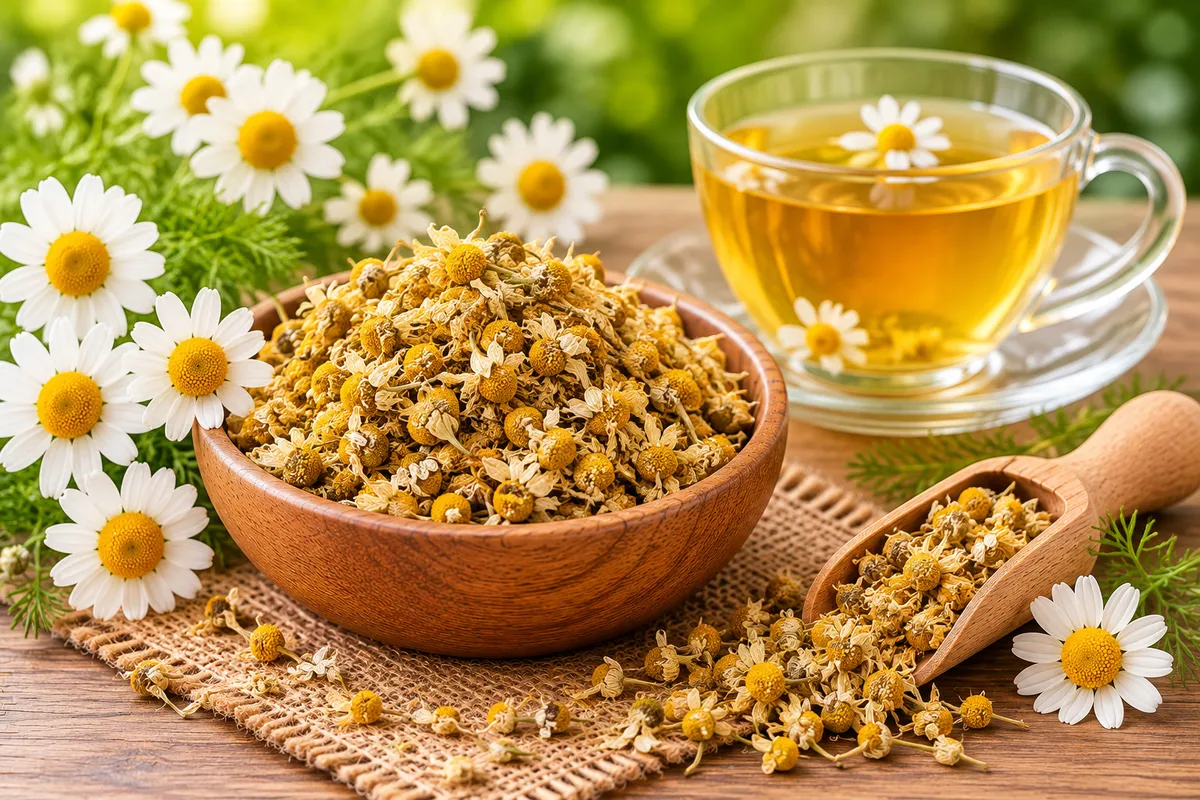
Dried Chamomile Flowers for Herbal Tea Manufacturing: Uses, Quality and Bulk Sourcing
Dried chamomile flowers are a popular botanical ingredient used in herbal tea blends, floral infusions and specialty beverage products. Their delicate floral aroma and mild flavour make them an option for tea brands, beverage manufacturers and businesses developing botanical ingredient ranges.
For commercial buyers, sourcing chamomile flowers in bulk requires attention to flower appearance, aroma, cleanliness, moisture specifications, packaging and batch consistency.
This guide explains how dried chamomile flowers are used in commercial tea production and what B2B buyers should consider before selecting a supplier.
1. What Are Dried Chamomile Flowers?
Chamomile flowers are the dried flower heads of chamomile plants. They are used as a botanical ingredient in herbal infusions and selected food and beverage preparations.
Depending on the intended application, buyers may require whole flower heads, flower pieces or a particular grade based on the agreed product specification.
The botanical identity, product form and quality requirements should be confirmed with the supplier before procurement.
2. Commercial Applications of Dried Chamomile Flowers
Herbal tea blends
Chamomile flowers can be used as a standalone herbal infusion ingredient or combined with other botanicals. Tea manufacturers may develop blends with ingredients such as mint, lemongrass and other suitable dried herbs.
Floral and botanical infusions
Specialty beverage brands can consider chamomile for floral infusion products and botanical beverage ranges.
Tea bags and loose-leaf tea
Depending on the required cut and product specifications, chamomile flowers may be suitable for loose-leaf tea products and selected tea-bag formulations.
Private-label herbal tea products
Private-label manufacturers may use chamomile flowers when developing branded herbal tea collections, floral blends and specialty infusion products.
Botanical ingredient distribution
Ingredient distributors and wholesalers may source dried chamomile flowers for supply to tea manufacturers, beverage businesses and other commercial buyers.
3. Quality Factors to Check Before Bulk Purchasing
Before placing an order, buyers should establish clear specifications and evaluate a representative sample.
Botanical identity
Confirm the botanical name and the exact plant material being supplied. This helps buyers ensure that the ingredient matches their formulation requirements.
Flower appearance
Evaluate the colour, flower-head condition and overall appearance against the agreed sample and specification.
Aroma
Check that the product has a characteristic chamomile aroma. Unusual or unpleasant odours should be investigated before accepting a batch.
Flower size and product form
Confirm whether the requirement is for whole flower heads, broken flowers or another agreed cut. Product form can influence its suitability for tea bags and loose-leaf products.
Moisture content
Agree on moisture specifications with the supplier. Appropriate moisture management is important for handling and storage of dried botanicals.
Cleanliness
Inspect the material for visible foreign matter and other contamination concerns. Review the supplier's quality-control procedures.
Testing and documentation
Depending on the intended application and destination market, buyers may request relevant microbiological testing, pesticide residue analysis, heavy metal testing and other applicable reports.
Batch consistency
Compare samples and specifications across batches to help maintain consistency in finished tea products.
4. Choosing the Right Chamomile Flower Form
The appropriate form depends on the manufacturer's product design and processing requirements.
Whole flower heads: May suit loose-leaf tea products and formulations where visible flowers are preferred.
Broken flowers: May be considered for blends requiring smaller botanical pieces.
Selected cut sizes: Can be evaluated for tea-bag and other specific manufacturing requirements.
Buyers should confirm the available forms, cut sizes and specifications with the supplier rather than assuming that every form is available.
5. Packaging and Storage Considerations
Dried chamomile flowers should be protected from excess moisture, direct sunlight, excessive heat and strong external odours.
Packaging should be appropriate for the product, transportation conditions and intended storage period. Buyers should discuss packaging requirements with the supplier before placing a bulk order.
After delivery, store the flowers in suitable sealed packaging in a clean, dry environment. Follow the supplier's storage recommendations and maintain batch identification for inventory management.
6. How to Choose a Reliable Dried Chamomile Supplier
Tea manufacturers, ingredient distributors and procurement teams should evaluate suppliers using clear purchasing criteria.
Product specifications: Confirm botanical identity, flower form, appearance and agreed quality parameters.
Sample evaluation: Assess a representative sample before placing a larger order.
Quality documentation: Request relevant specifications and applicable test reports.
Batch consistency: Understand how the supplier maintains agreed quality across batches.
Packaging suitability: Discuss packaging options for storage and transportation.
Traceability: Check whether batch identification and relevant traceability information are available.
Commercial terms: Clarify quotations, order conditions and delivery arrangements.
Destination-market requirements: Discuss documentation and quality requirements relevant to the intended market.
Comparing suppliers against these points can help businesses make more informed sourcing decisions.
7. Sourcing Herbal Tea Ingredients from India
India is an important sourcing market for agricultural ingredients, spices and botanical products. International buyers evaluating suppliers should review product specifications, quality documentation, traceability and export suitability.
Businesses sourcing several botanical ingredients may also benefit from exploring a supplier's wider range of dried herbs and tea ingredients.
Explore Damodarr Global's Teas category and Dried Herbs & Botanical Ingredients category for information about its ingredient categories.
For product availability and B2B sourcing enquiries, visit the Damodarr Global Contact Page.
8. Frequently Asked Questions
What are dried chamomile flowers used for?
They are used in herbal tea blends, floral infusions, loose-leaf tea products and selected specialty beverage formulations.
Can chamomile flowers be used in tea bags?
Depending on the flower form and agreed cut size, chamomile may be suitable for selected tea-bag formulations. Manufacturers should test the ingredient in their intended production process.
What should buyers check before purchasing chamomile flowers in bulk?
Buyers should evaluate botanical identity, appearance, aroma, flower form, moisture specifications, cleanliness, relevant documentation and batch consistency.
What is the difference between whole and broken chamomile flowers?
Whole flower heads retain their complete flower form, while broken flowers consist of smaller pieces. The suitable option depends on the finished product and manufacturing requirements.
How should dried chamomile flowers be stored?
Store them in suitable sealed packaging in a clean, dry environment, protected from excess moisture, direct sunlight and strong external odours.
What documents should bulk buyers request?
Depending on the application and destination market, buyers may request a product specification sheet, certificate of analysis, relevant test reports and traceability information.
How can I enquire about bulk dried chamomile flowers?
Contact Damodarr Global through its official contact page to discuss product requirements and sourcing enquiries.
Conclusion
Dried chamomile flowers are a useful botanical ingredient for herbal tea brands, beverage manufacturers and businesses developing specialty infusion products.
Successful bulk sourcing depends on confirming botanical identity, selecting the appropriate flower form, defining quality specifications, evaluating samples and agreeing on suitable packaging.
Explore Damodarr Global for botanical, tea and food ingredient sourcing enquiries.