
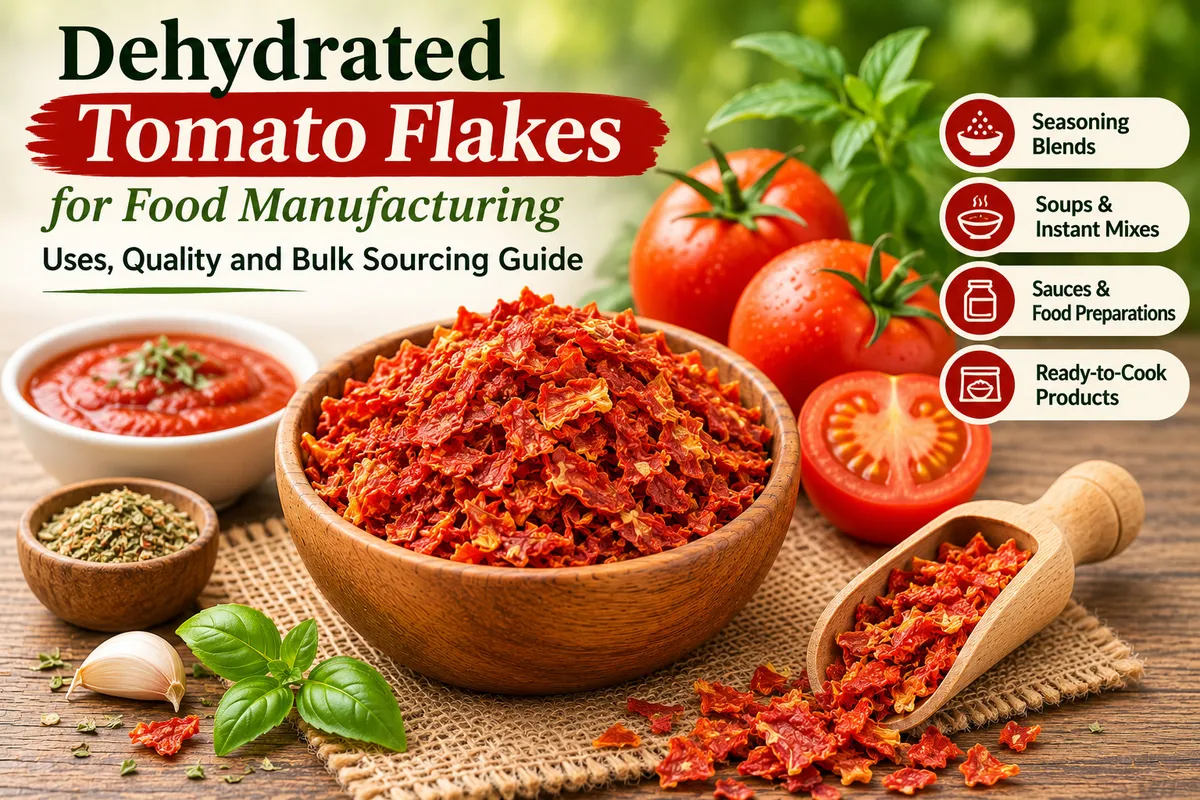
Dehydrated Tomato Flakes for Food Manufacturing: Uses, Quality and Bulk Sourcing
Dehydrated tomato flakes are used in a variety of commercial food applications, including seasoning blends, soups, sauces, instant mixes and convenience foods. They offer food manufacturers a dried tomato ingredient that can be incorporated into formulations where a specific texture, flavour profile and ingredient format are required.
For businesses purchasing ingredients in bulk, choosing a suitable supplier involves evaluating product specifications, appearance, moisture, packaging and batch consistency.
This guide explores the commercial applications of dehydrated tomato flakes and the important factors buyers should consider before placing a bulk order.
1. What Are Dehydrated Tomato Flakes?
Dehydrated tomato flakes are produced by removing moisture from processed tomatoes and preparing the dried material into a flake format.
They are used as an ingredient in food products where dried tomato pieces are suitable for the formulation. Their final characteristics can vary according to the raw material, processing method, flake size and product specifications.
Food manufacturers should confirm the exact product form and specifications before purchasing.
2. Commercial Applications of Dehydrated Tomato Flakes
Seasoning blends
Tomato flakes can be incorporated into selected seasoning blends for snacks, savoury products and food preparations. They may be combined with herbs, spices and other dehydrated ingredients.
Soups and instant mixes
Manufacturers may use dehydrated tomato flakes in soup mixes, instant meal products and dry food preparations, depending on the required rehydration and texture characteristics.
Sauces and food preparations
Dried tomato ingredients can be considered for selected sauce mixes and other formulations where tomato flavour and dried ingredient formats are appropriate.
Ready-to-cook products
Convenience food manufacturers may evaluate tomato flakes for selected ready-to-cook mixes, meal kits and packaged food preparations.
Private-label food products
Private-label brands can consider dehydrated tomato flakes as an ingredient in seasoning products, instant mixes and other packaged food ranges.
3. Quality Factors to Check Before Bulk Purchasing
Food manufacturers should establish clear product specifications before confirming a bulk purchase.
Flake size and appearance
Check the agreed flake dimensions, colour and overall appearance. Consistency is important when the ingredient is used in standardised formulations.
Aroma and flavour
The product should have a characteristic dried tomato aroma and flavour. Compare the sample with the agreed product specification.
Moisture content
Agree on moisture parameters with the supplier. Moisture management is important for the handling and storage of dehydrated ingredients.
Cleanliness
Evaluate the material for visible foreign matter and other contamination concerns. Review relevant supplier quality-control procedures.
Rehydration characteristics
For applications where the flakes are rehydrated, manufacturers should evaluate their performance in the intended recipe and processing conditions.
Testing and documentation
Depending on the intended application and destination market, buyers may request relevant microbiological testing, pesticide residue analysis, heavy metal testing and other applicable reports.
Batch consistency
Compare samples and specifications across batches to help maintain consistency in finished food products.
4. Packaging and Storage Considerations
Dehydrated tomato flakes should be protected from moisture, excessive heat, direct sunlight and unsuitable storage conditions.
Packaging should be appropriate for the product specifications, transportation requirements and intended storage period.
After delivery, store the ingredient in suitable sealed packaging in a clean, dry environment. Follow the supplier's storage recommendations and maintain batch identification for inventory control.
5. How to Choose a Reliable Dehydrated Tomato Flakes Supplier
Before selecting a bulk supplier, food manufacturers and procurement teams should evaluate the following:
Product specifications: Confirm flake size, appearance, moisture parameters and other agreed characteristics.
Sample evaluation: Assess a representative sample before placing a larger order.
Quality documentation: Request relevant specifications and test reports.
Batch consistency: Understand how the supplier manages product quality between batches.
Packaging suitability: Discuss packaging options for storage and transportation.
Traceability: Check whether batch identification and relevant traceability information are available.
Commercial terms: Clarify quotation details, order conditions and delivery arrangements.
A supplier comparison based on these factors can help buyers make informed procurement decisions.
6. Dehydrated Tomato Flakes in the Wider Dehydrated Ingredient Range
Food manufacturers often source multiple dehydrated ingredients for their formulations. Depending on product requirements, tomato flakes may be evaluated alongside dehydrated vegetables, herbs and seasoning ingredients.
Explore the Dehydrated Fruits & Vegetables category and the Dried Herbs & Botanical Ingredients category on Damodarr Global.
For product availability and commercial sourcing enquiries, visit the Damodarr Global Contact Page.
7. Frequently Asked Questions
What are dehydrated tomato flakes used for?
They can be used in seasoning blends, soups, instant mixes, sauces and selected processed food formulations.
What should food manufacturers check before purchasing tomato flakes?
Buyers should evaluate flake size, colour, aroma, flavour, moisture specifications, cleanliness, rehydration performance where relevant, packaging and batch consistency.
Can dehydrated tomato flakes be used in seasoning blends?
Yes. They can be incorporated into suitable seasoning formulations with herbs, spices and other dried ingredients.
How should dehydrated tomato flakes be stored?
They should be stored in suitable sealed packaging in a clean, dry environment, protected from excess moisture and unsuitable storage conditions.
What documents should bulk buyers request?
Depending on the application and destination market, buyers may request a product specification sheet, certificate of analysis, relevant test reports and traceability information.
How can I enquire about bulk dehydrated tomato flakes?
Contact Damodarr Global through its official contact page to discuss product requirements and sourcing enquiries.
Conclusion
Dehydrated tomato flakes are a useful ingredient format for food manufacturers developing seasoning blends, soups, sauces and convenience food products.
Successful bulk sourcing depends on clearly defined product specifications, sample evaluation, appropriate documentation, suitable packaging and supplier consistency.
Explore Damodarr Global for dehydrated ingredient and food sourcing enquiries.