
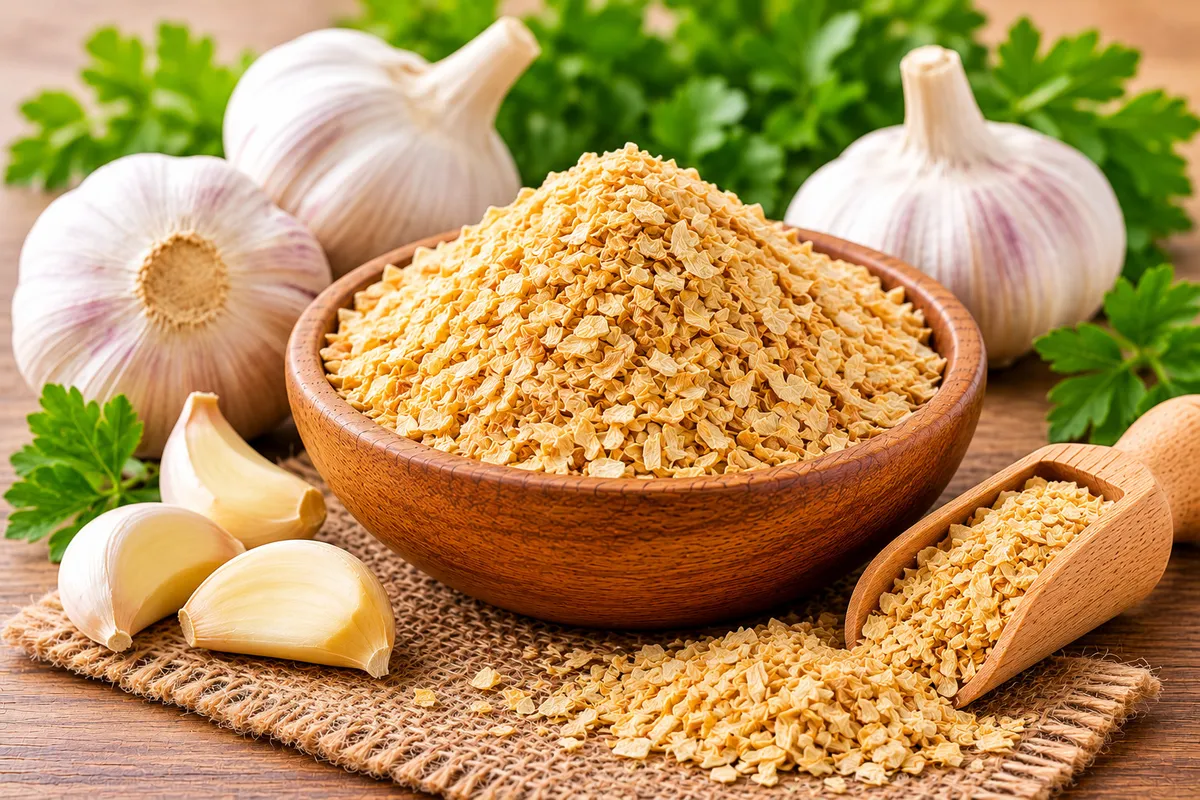
Dehydrated Garlic Granules: Uses, Quality and Bulk Sourcing for Food Manufacturers
Garlic is one of the most widely used ingredients in commercial food preparation. Its distinctive aroma and flavour make it an important component in sauces, seasonings, snacks, ready-to-cook products and numerous processed food formulations.
For food manufacturers, handling and processing fresh garlic can require additional preparation and storage. Dehydrated garlic granules provide an alternative ingredient format that can be incorporated into different commercial food applications.
For B2B buyers, selecting the right product requires evaluating granule size, aroma, colour, moisture specifications, cleanliness and packaging.
This guide explores the commercial applications of dehydrated garlic granules and the important factors buyers should consider when sourcing them in bulk.
What Are Dehydrated Garlic Granules?
Dehydrated garlic granules are produced by removing moisture from prepared garlic and processing the dried material into small granular particles.
They are used as a culinary ingredient in different food formulations where garlic flavour is required.
Depending on processing specifications, dehydrated garlic may be available in different forms, including:
Garlic flakes
Garlic granules
Garlic powder
Granules generally have a coarser particle size than garlic powder. The preferred format depends on the manufacturer's formulation and processing requirements.
Commercial Applications of Dehydrated Garlic Granules
1. Seasoning and Spice Blends
Garlic is a common ingredient in seasoning formulations.
Dehydrated garlic granules can be considered for:
All-purpose seasoning blends
Barbecue seasoning
Garlic herb seasoning
Savoury spice mixes
Restaurant seasoning preparations
Manufacturers can combine garlic granules with herbs, spices and other ingredients to develop specific flavour profiles.
2. Snack and Savoury Food Manufacturing
Snack manufacturers use garlic-based seasonings to develop different savoury flavours.
Potential applications include:
Potato chips
Extruded snacks
Savoury crackers
Roasted snack mixes
Flavoured nuts
The appropriate particle size and application method should be evaluated according to the manufacturing process.
3. Sauce and Condiment Production
Dehydrated garlic granules can be evaluated for use in selected sauce and condiment formulations.
Applications may include:
Garlic-based sauces
Pasta sauces
Marinades
Dipping sauces
Savoury cooking sauces
Manufacturers should assess hydration behaviour, texture and flavour distribution during formulation testing.
4. Instant and Ready-to-Cook Foods
Instant food manufacturers often use dried ingredients in products designed for convenient preparation.
Garlic granules may be incorporated into:
Instant noodle seasoning
Soup mixes
Ready-to-cook meal kits
Curry preparation mixes
Dry gravy blends
Their suitability depends on the product's preparation method and desired final texture.
5. Frozen and Processed Food Products
Food processors may evaluate dehydrated garlic as an ingredient in selected frozen and processed food formulations.
Potential applications include vegetable preparations, savoury fillings, ready meals and other products where garlic flavour is required.
Why Food Manufacturers Consider Dehydrated Garlic Granules
Dehydrated garlic granules offer several practical characteristics for commercial food production.
Convenient ingredient handling: The dried format can simplify ingredient handling compared with preparing fresh garlic for every production batch.
Multiple applications: Granules can be evaluated in seasoning blends, sauces, snacks and instant food products.
Defined particle size: Granular ingredients allow manufacturers to select a format suitable for their intended formulation.
Storage convenience: Dried garlic can be stored according to appropriate packaging and moisture-control requirements.
Formulation flexibility: Manufacturers can adjust the quantity used according to their required garlic flavour profile.
Actual shelf life, storage requirements and performance should be confirmed through product specifications and supplier documentation.
Quality Factors to Check Before Bulk Purchasing
Selecting dehydrated garlic granules requires attention to several product characteristics.
1. Colour and Appearance
Evaluate the granules for colour consistency, appearance and visible foreign material.
The expected colour should be confirmed through an approved product specification and sample.
2. Aroma and Flavour
Garlic's characteristic aroma is an important quality consideration.
Buyers should evaluate samples to ensure that the flavour profile is appropriate for the intended food application.
3. Granule Size
Particle size can influence ingredient distribution, texture and performance in a food formulation.
Confirm the available granule size and request specifications before placing an order.
4. Moisture Content
Moisture content is an important parameter for dehydrated ingredients.
Ask the supplier for documented moisture specifications and confirm that they meet your product and storage requirements.
5. Cleanliness and Foreign Matter
Evaluate the product for unwanted foreign material and check the supplier's cleaning and sorting procedures.
Relevant quality documentation should be reviewed before commercial procurement.
6. Packaging
Packaging should protect dehydrated garlic from moisture, contamination and physical damage during storage and transportation.
Confirm the packaging material, available pack sizes and recommended storage conditions.
7. Batch Consistency
For repeat manufacturing requirements, buyers should assess whether granule size, colour, aroma and other agreed specifications remain consistent between batches.
How to Choose a Dehydrated Garlic Granules Supplier
Choosing a suitable supplier is an important part of bulk ingredient procurement.
Before confirming an order, B2B buyers should consider:
Product specifications and granule size
Aroma, colour and appearance
Moisture specifications
Cleaning and sorting requirements
Sample availability
Packaging options
Quality documentation
Bulk order handling capabilities
Export documentation, where applicable
Clear commercial terms
International buyers should also confirm applicable import regulations, documentation and shipping requirements before placing an order.
Sourcing Dehydrated Food Ingredients from India
India has an established agricultural and food-processing sector supplying different herbs, spices, seeds and dehydrated food ingredients.
International food manufacturers, distributors and wholesalers can explore Indian suppliers for their ingredient procurement requirements.
However, buyers should independently evaluate product specifications, samples, quality documentation and supplier capabilities before confirming commercial orders.
A clear sourcing process helps establish expectations for product quality, packaging and repeat procurement.
Frequently Asked Questions
1. What are dehydrated garlic granules used for?
They can be used in seasoning blends, sauces, instant noodles, soup mixes, savoury snacks, marinades and processed food formulations.
2. What is the difference between garlic granules and garlic powder?
Garlic granules have a coarser particle size, while garlic powder is finely ground. Manufacturers select the format according to their formulation and processing requirements.
3. What should bulk buyers check before purchasing garlic granules?
Buyers should evaluate colour, aroma, flavour, granule size, moisture content, cleanliness, packaging and batch consistency.
4. Can dehydrated garlic granules be used in seasoning blends?
Yes. They can be considered for garlic seasoning, barbecue seasoning, herb blends and other savoury spice formulations.
5. How should dehydrated garlic granules be stored?
They should be stored in suitable packaging under dry conditions and protected from moisture, contamination and excessive heat. Follow the supplier's storage instructions.
6. Are dehydrated garlic granules suitable for export?
They may be suitable for international commercial supply, subject to product specifications, applicable food regulations, documentation and destination-country import requirements.
Conclusion
Dehydrated garlic granules are a versatile ingredient for food manufacturers developing seasoning blends, sauces, savoury snacks, instant foods and processed products.
For B2B buyers, choosing the right ingredient requires careful evaluation of granule size, aroma, colour, moisture specifications, cleanliness and packaging.
Damodarr Global operates in the B2B agricultural and food ingredient supply sector, connecting buyers with a range of dried herbs, botanical ingredients, teas and dehydrated food ingredients.
Explore our Dehydrated Fruits and Vegetables category or contact Damodarr Global for ingredient sourcing enquiries.
Publishing note: Confirm that dehydrated garlic granules are currently available in Damodarr Global's product range before publishing this article as a direct product offering.